

In our previous blog post, “10 Signs Your Dog Is Stressed,” we dug into the body language of our canine companions.Now, armed with the understanding of canine body language and discomfort, it’s time to take action.
In this follow-up blog, Practical Ways to Help Your Anxious Dog, we’ll explore 13 strategies to support your anxious or stressed dog, offering solutions to alleviate their tension and promote a happier, healthier life.
Before diving into ways to help your anxious dog, it’s essential to grasp triggers that can lead to stress in dogs. Whether it’s changes in your household (which can include a move, a new baby or even death), noisy disturbances (such as a baby or children making noise, loud vehicles that pass, an alarm, yelling), social conflicts or health issues, our dogs are susceptible to a range of stressors. As responsible pet owners, it’s crucial to remain vigilant to these potential triggers and proactive in addressing them.

While witnessing our dogs in distress can be distressing in itself, the silver lining is that we have the power to help them. By implementing targeted interventions and providing a supportive environment, we can significantly improve their well-being and quality of life. So, let’s explore practical ways to help your anxious dog.
What is a trigger and how does it play a role?
A trigger is anything that causes a dog to react, whether positive or negative, such as a sound, smell, sight, or feeling. Triggers are unique to each dog and can include:
- Loud noises
- Other dogs
- Strangers
- Busy roads
- Children
- Physical contact from strangers
- Unfamiliar places
- Certain environments like a vet or groomer
Don’t force your dog to interact with the trigger
When our dogs face fears, whether from another animal, a person, a place, a sound, or even a child, pushing them to confront those fears directly is rarely the best approach.
This principle extends to guests visiting our homes. If your dog feels uneasy around guests, it’s important not to force them to interact, especially when it comes to feeding. Forcing your dog to accept food from someone they find frightening doesn’t foster positive associations. Instead, it creates inner conflict for the dog: “I want the treat, but that person is terrifying.”
Let’s step into the dog’s paws for a moment. Imagine I walk into your home with a pet rat perched on my shoulder. You’re terrified of rats, and the sight of it scurrying up and down my arms sends shivers down your spine. Despite your discomfort, I insist on sitting beside you, assuring you the rat won’t harm you. How would you react?
1. Allowing the rat to roam between us?
2. Keeping your distance.
3. Asking me to leave.
4. Reacting with screams and tension due to fear.
If you’re afraid of rats, it’s likely your response matches options 2 through 4.
Instead of forcing interactions between your dog and frightening stimuli, it’s better to maintain a safe, comfortable distance and reward your dog for calm behavior.
A safe distance means your dog can observe the trigger without exhibiting signs of distress like growling, barking, or tense body language. Offering treats for relaxed behavior reinforces positive associations and helps desensitize your dog to the trigger over time.
This approach, known as desensitization, prioritizes your dog’s emotional well-being by allowing them to associate positive experiences with previously stressful situations. Similarly, when introducing your dog to a newborn, this technique can help them learn to associate the baby with positive experiences, fostering a positive relationship between your dog and child.
Not every fear can be avoided
Medical and grooming needs must be fulfilled in order for a dog to remain healthy. When a dog is frightened, they often become hyper-vigilant and may reject food.
Incorporating medical and grooming care into socialization efforts, particularly for young puppies, is essential. For families who adopt older dogs who may enter the home with an aversion to vet and grooming visits, it will take time and practice to acclimate your dog to those visits.
Through counter-conditioning efforts, you can work with your dog to reduce their anxiety and make these experiences more positive.
Debra Horwitz, DVM, DACVB & Gary Landsberg, DVM, DACVB, DECAWBM provide tips for helping your dog overcome fear of the vet in their article on the topic.
They suggested asking your veterinarian to remove the white lab coat before entering the room until you can get your dog comfortable seeing the doctor wearing one.
In between vet visits, wear a white lab coat at home. Interacting with your dog in a fun and positive way while wearing the coat. This means, playing ball, feeding, teaching new tricks or just petting the dog.
Think of all of the dog’s senses when it comes to vet and grooming visits. Smell of the shampoo or perfume they use at the grooming place may cause fear in the dog. So can the type of disinfectant used by the vet’s office. Find out what brands they use and buy it at home. In doing so, we are removing the association to that odor.
Seeing certain medical tools can cause stress for your dog. The sound of dogs barking, phones ringing, music, medical tools against metal pans can all trigger a dog’s negative associations.
We should pay attention to the sounds in the room and how our dog reacts. Is it the vet’s office or dog’s barking in the waiting room that triggers your dog?
In both vet visits and grooming appointments, touch also plays a role in canine emotions. Dogs don’t always love having people touch their ears, mouth, nose, legs, tail and collar, especially when it is someone who pokes and prods them.
Even down cthe taste of the vet’s cookies can be a turn off to a dog. That taste leads to negative feelings. Bringing your own treats may help.
In between vet visits, duplicate these triggers at home. Whether it be a sound, sight, feeling or smell. Try to figure out what upsets your dog so you know where to get started. To read more on this topic, click here.
Do not overly comfort a nervous dog

Over-coddling an anxious, nervous dog can reinforce their anxiety. Stanley Coren, PhD., DSc., FRSC indicates that , “Petting a dog when he’s acting in a fearful manner actually serves as a reward for the behavior; it’s almost as if we’re telling the dog that being afraid in this situation is the right thing to do.”
I realize this tip will trigger some people. I am not implying that you need to toss your shaking dog off your lap after they crawl up there for comfort. No. What I am referring to are people who follow dogs to a hiding place in order to provide comfort for the dog. Consoling a dog who is hiding can have the reverse effect.
I once worked with an owner who sought comfort for her dog during a thunderstorm by settling on the dog’s bed with him, petting him, and reassuring him that the storm posed no threat. However, as she consoled her pet, her hand inadvertently moved up to the dog’s collar. In an unexpected turn, the dog reacted by biting her face. Why did this happen? On previous mornings, the dog had been led outside for bathroom breaks by the collar. On that particular day, the dog misinterpreted the owner’s attempt to provide comfort as a signal to go outside despite the storm.
Another example includes owners who pet their dog while the dog barks, growls and lunges toward strangers entering the house.
Have you ever caught yourself providing your dog with a reassuring pet while they bark and lunge at the mail carrier or another dog?
Finally, we touched on desensitizing a dog in an earlier portion of this blog. It is important to understand that desensitizing dogs who are barking, growling, whining doesn’t work. You cannot desensitize a dog who is stressed by the trigger and over threshhold.
Provide Physical Exercise
Engaging your dog in regular physical activity serves as an excellent outlet for releasing built-up energy, ultimately aiding in the reduction of stress and anxiety. Moreover, exercise triggers the release of endorphins in your dog’s brain, fostering joy and overall well-being. Since exercise is known to lower stress in humans, enjoying a stroll or game of catch can be a win for you and your dog.
Provide a predictable routine
Establishing a consistent daily routine at home plays a pivotal role in minimizing unexpected disruptions that could potentially trigger stress in your dog.
Feed your dog at consistent times each day, carve out dedicated time slots for play and training sessions and maintain a composed demeanor when leaving for work and a welcoming ritual for your return home.
Refrain from kissing and hugging your dog before leaving. Similarly, don’t assure the dog you’ll be back. It is best to leave the home without the fanfare. Simply leaving treats on the ground or in the dog’s bowl is sufficient. When you do return home, avoid calling out to the dog to let them know you’ve returned home and missed them. Instead, walk in the house, put your belongings away. Sit down and calmly pet your dog.
Owners tend to announce activities throughout the day (ex: want to go for a walk, want a cookie, want to go for a car ride?) It is best to get the leash when you are leaving the house and placing the dog in a sit or on place when preparing meals. Announcing events disrupts the dog and heightens arousal or concern.
Dogs are better off when we provide a sense of predictability and security in their daily life.
Establish a quiet place for your dog to relax
Like us, all dogs require downtime. Whether your dog is shy, anxious, sound sensitive or a happy, friendly dog, providing a safe space can offer solace and aid in managing stress.
Having a safe place to retreat (whether that be a crate, bed, room, etc.) provides a sense of security and comfort for our dogs.
Dietary changes:
Did you know that a “Poor diet results in an unbalanced and possibly nutrient-deficient body. An unhealthy body is more likely to become stressed, exhibit inflammation or manifest disease”. (Sarah Wallace, DVM, Pet Nutrition Coach Certified)
Since I am neither a canine nutritionist nor a vet, I provided a link to Dr. Wallace’s blog so you can read more on nutrition and canine behavior.
Provide mental stimulation for your dog
Dogs who lack mental stimulation are likely to suffer from stress, anxiety and depression.
According to an article written by PubMed Central, “Captive animals lacking sensory or cognitive stimulation (such as when exercise, exploration and/or learning opportunities are reduced) have weakened neural pathways, which can result in their brains becoming physically smaller. Some of these boredom behaviors have been described in dogs that lack physical and mental stimulation. By providing dogs with cognitive and environmental stimulation, their quality of life can be improved, and the prevalence of abnormal behaviors may be reduced.”
Mental stimulation can be as simple as providing treat releasing balls and snuffle mats for your dog during mealtime to participating in hikes, swimming or scent work.
When we provide mentally stimulation items, we allow dogs to act like dogs. I never believed in a dog eating from a bowl that is placed on a placemat. That is how humans eat. Dogs forage and hunt for food.
Allow your dog the option to move away
Avoid letting people, animals, or other triggers approach your dog when they are unable to escape, whether they are on leash, behind a fence, in a car or confined in a crate. The principle of not cornering a dog extends beyond literal corners; it encompasses any situation where a dog feels trapped or unable to flee.
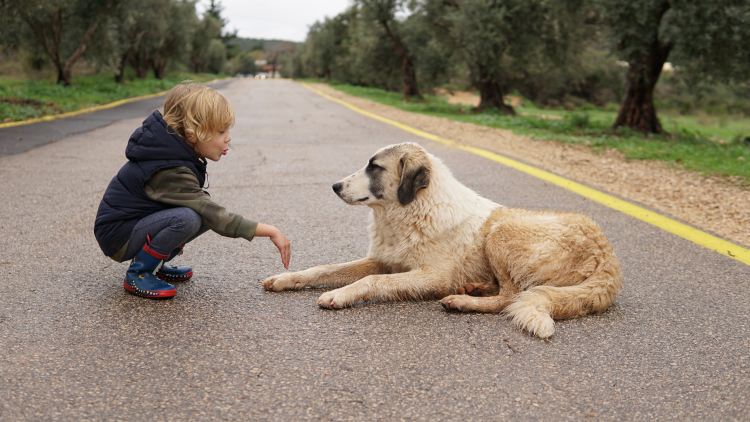
Incidents of dog bites often involve scenarios where a child or adult intrudes upon a dog’s confined space. This could involve removing a dog from a crate or from under furniture, reaching into car windows to interact with a dog, or attempting to pet a tied-up dog over a fence.
Even seemingly harmless situations, such as a dog walking past a child in a narrow hallway or finding itself trapped between furniture with a toddler nearby, can induce stress in the dog, particularly when escape routes are limited.
In each of these instances, the stressed dog is confined and unable to retreat, heightening the risk of a negative interaction.
Watch your body language and your tone
Be mindful of your body language and tone when interacting with your dog.
While dogs are sensitive to our emotions, they may misinterpret them. Feelings of sadness or anger can cause stress or confusion for your dog, while excessive enthusiasm can lead to overstimulation and excitability.
When issuing commands to your dog, avoid bending at the waist and invading their personal space. Dogs have keen hearing, and looming over them can be perceived as rude and intimidating. Instead, maintain a calm posture and speak clearly and assertively.
Yelling at your dog is counterproductive. Similar to children, dogs may either ignore you or become stressed in response to raised voices. Learning becomes impossible when a dog is in a negative emotional state. Furthermore, it’s essential to remember that dogs don’t understand human language in the same way we do. Therefore, it’s best to communicate using simple, familiar commands rather than lengthy explanations or lectures. Keeping a cool demeanor and using language your dog comprehends will foster effective communication and positive interactions.
Distract your dog by offering commands they know well.
This tip will not work for a dog that is over threshold. What does that mean?
In dog training, a threshold refers to the distance a dog can tolerate a trigger without reacting negatively or becoming upset.
When a dog exceeds this threshold and responds emotionally to a stimulus, it indicates that their tolerance limit has been surpassed.
While barking, lunging, jumping, nipping, humping and growling can be a sign that the dog is over threshold, other signs are freezing, refusal to eat food or play a game.
Adding plenty of space between your dog and the trigger will likely permit your dog to respond to your commands and eat food rewards. When your dog is placed or in a sit, they usually do better than allowing them to pace nervously around the space you’re in.
Minimize stressors
If you know that your dog does not enjoy crowds, when you have groups of people over, board your dog, keep him in a quiet room or crated until after the festivities.
If your dog does not enjoy children, keep them separated with gates and play yards. Seek help from a certified dog bite prevention educator.
While there are ways to help a dog feel more comfortable in certain situations, we will never win a dog over by forcing them into situations.
Yesterday I walked with a client dog who feared a statue on the neighbor’s front lawn. Rather than forcing the dog to walk back and forth past it, I provided additional room by moving into the street when we passed it. By the third time around the block, the dog passed it without incident. I was able to accomplish this without food. I simply gave the dog space.
Conclusion
We discussed the importance of recognizing signs of stress in your dog and how that skill will promote their well-being, comfort and happiness, in our previous blog entitled 10 Signs Your Dog Is Stressed.
In this blog we learn that respecting your dog’s signals and providing support and reassurance in stressful situations, will lead to a stronger bond and a more relaxed dog.
Not everyone is fortunate enough to live uneventfully in a home with young children and a dog. Understanding their discomfort and then solving the problem with patience and empathy, will help your dog feel safe, secure, and loved. Thereby, making the home a little less stressful.
Dog Savvy Kids’ online program helping families integrate dogs into home with children will release in 2024. Follow us online to learn more about the upcoming release of this program.
 Dog Savvy Kids