

Dogs have evolved alongside humans for thousands of years, developing the ability to understand and respond to our emotions. This makes dogs fabulous companions, including for children with anxiety.
In this blog we will discuss ways dogs benefit the lives of children, including children who suffer from anxiety.
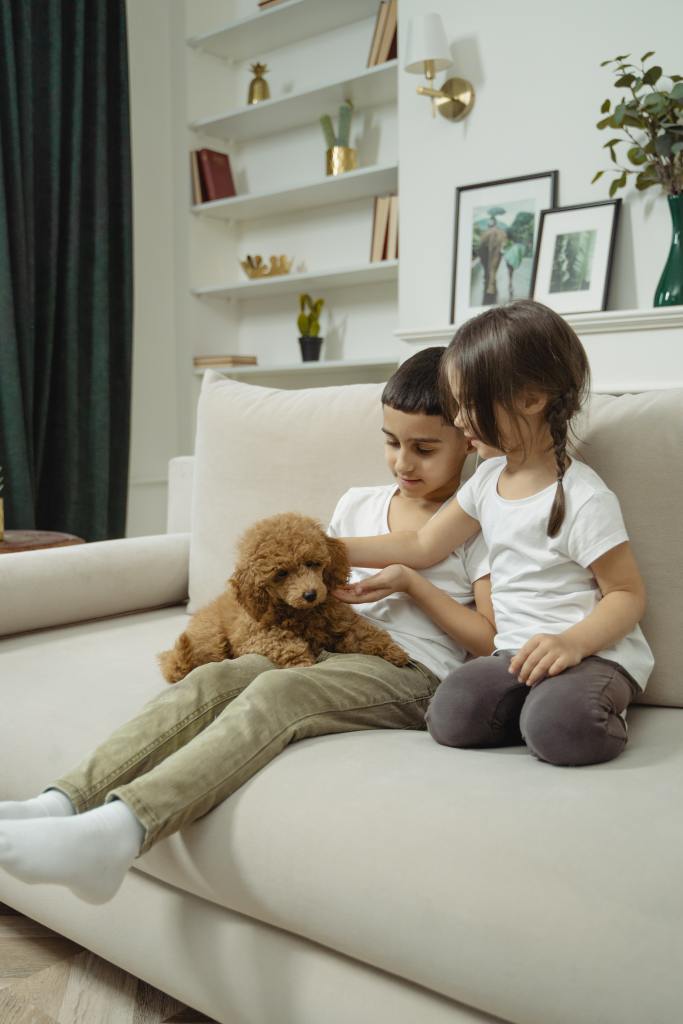
Understanding Human Emotions
Dogs are remarkable at interpreting human tone of voice, body language and facial expressions. They can sense when someone is happy, sad, stressed or anxious. This sensitivity allows them to respond appropriately, offering comfort when needed.
Dogs often mirror the emotions of their owners. When a child is feeling anxious, a dog may become calmer and more attentive, providing a steady and reassuring presence.
Physical Affection and Comfort
Physical touch is a basic human need, and dogs fulfill this through petting and cuddling. This interaction can calm and soothe a child quickly, reducing anxiety levels.
Studies have shown that petting a dog lowers the stress hormone cortisol in humans. For a child with anxiety, this physical interaction can significantly reduce feelings of stress and anxiety.
Increasing Feel-Good Hormones
The social interaction between children and their dogs increases levels of oxytocin, the feel-good hormone also known as the bonding hormone. Oxytocin helps to foster a sense of security and well-being, which is beneficial for anxious children.
The release of oxytocin during interactions with a dog strengthens the bond between the child and the dog, providing emotional support and companionship that can alleviate feelings of loneliness and anxiety.
Providing Consistent Companionship
Dogs offer unconditional love and are always happy to see their owners, regardless of their mood or behavior. This unwavering acceptance can be incredibly comforting for a child with anxiety, who may struggle with self-esteem and social interactions.
Having a dog provides a consistent and reliable source of companionship. For children who experience anxiety, knowing that their dog is always there for them can provide a sense of stability and predictability.
Encouraging Social Interaction
Dogs can act as social catalysts, making it easier for children with social anxiety to interact with others. Taking a dog for a walk or to the park can stimulate conversations and help the child build social skills in a more comfortable and natural way.
Children may find it easier to approach and talk to others when their dog is present, helping to reduce feelings of isolation and build confidence.
Creating a Sense of Responsibility and Routine
Caring for a dog involves feeding, grooming and exercising, which can help children develop a sense of responsibility. These acts strengthen the bond between the dog and child. This routine can be particularly beneficial for anxious children, providing structure and a sense of purpose.
To increase the dog’s connection to the child, having the child care for a dog will form that connection and an empathy for animals. You may not get the results you hoped for if the child does not interact with the dog on a regular basis. The relationship may be affected negatively if the child yells, hits, kicks and pushes a dog.
Dogs thrive on routine. Their need for a regular schedule can help bring a sense of predictability and stability to a child’s life. This regularity can be calming and help manage anxiety.
Emotional and Psychological Support
In times of anxiety, dogs can act as emotional anchors. Their calming presence and non-judgmental nature can help children feel more grounded and secure.
Dogs provide constant companionship, which can help reduce feelings of loneliness and isolation that often accompany anxiety. This companionship can be especially comforting during difficult times.
Conclusion
Dogs’ ability to tune into human emotions and provide empathetic responses makes them invaluable companions for children with anxiety. Their presence can lower stress hormones, boost feel-good hormones and provide consistent emotional support.
By offering unconditional love, encouraging social interaction and creating a sense of routine, dogs help children with anxiety feel more secure, confident, and emotionally balanced.
How has your dog enhanced the life of your child?
To learn more about dogs and children, visit dogsavvykids.com. Check back for our course “Raising a puppy in a home with young children.” This course teaches you how to find the right puppy, the age a puppy should come home and steps you can take to enhance the relationship between your child and new dog.
 Dog Savvy Kids